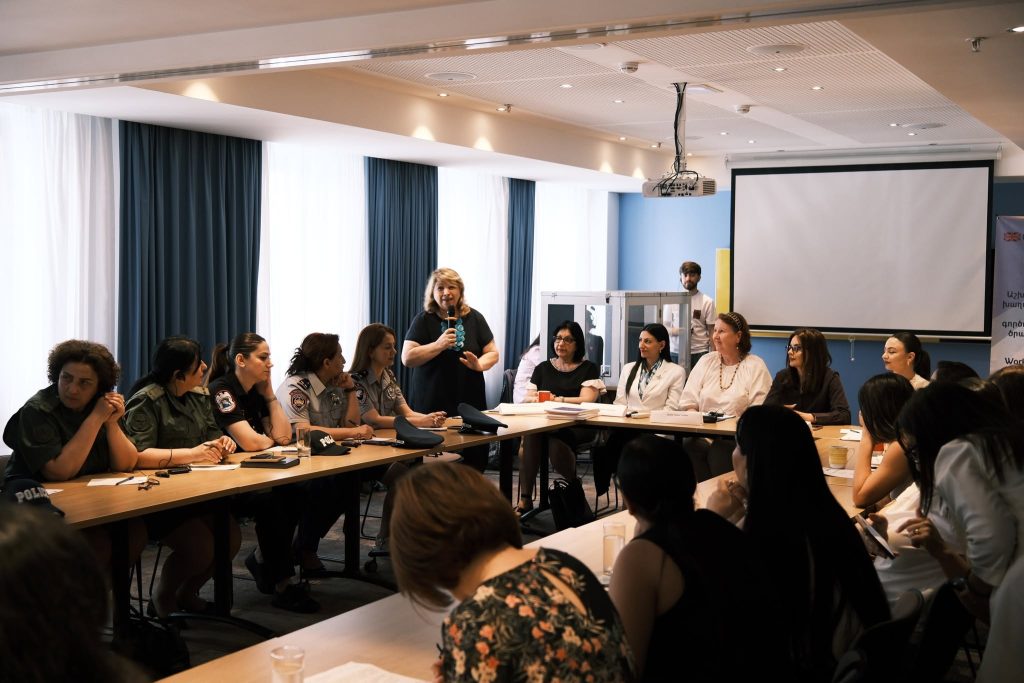
On 23 June, a high-level thematic discussion titled “The Practical Implementation of Armenia’s Third National Action Plan on the Women, Peace and Security Agenda: ‘Investing in Global Peace’” was held in Yerevan.
The discussion was organized by Democracy Today NGO and the Center of Excellence for Inclusive Security and Peace within the framework of the “Strengthening Eastern Neighbourhood Resilience 2” project, funded by the UK Government and implemented by the Institute for War & Peace Reporting (IWPR).
The event brought together representatives of state institutions, the security and defense sectors, international organizations, civil society, and the expert community to discuss how Armenia’s Women, Peace and Security (WPS) Third National Action Plan can be translated into practical results.
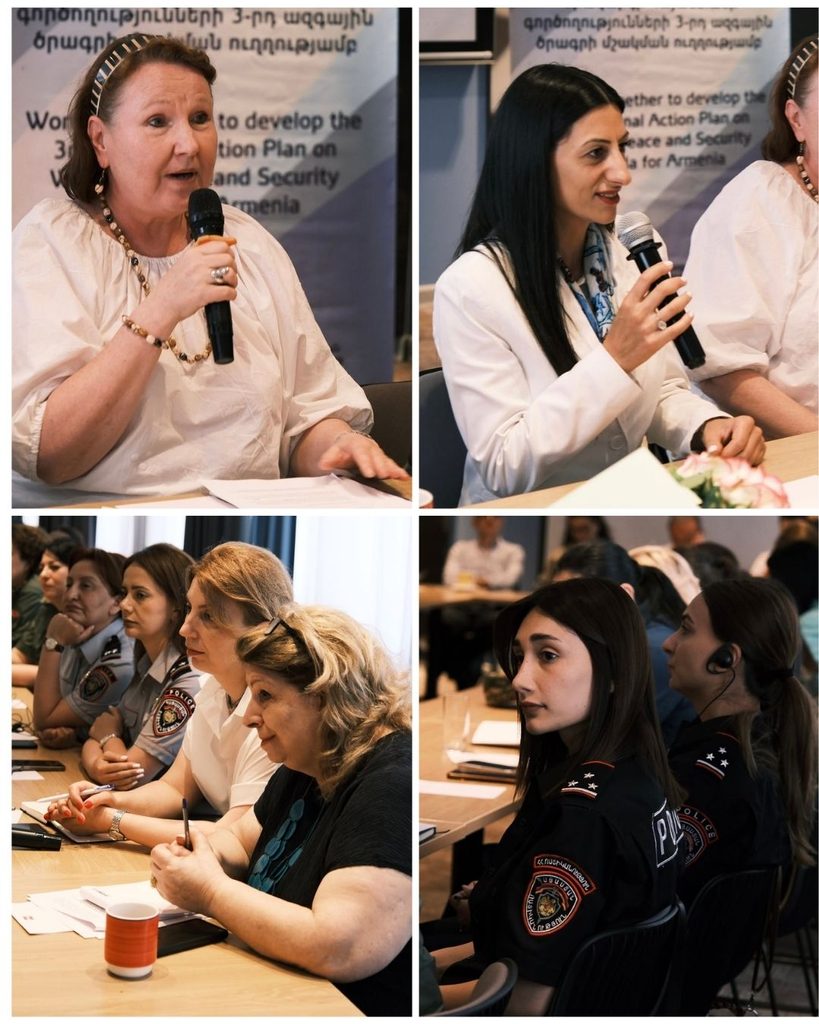
During the first panel, speakers shared their experiences, perspectives, and institutional approaches to advancing the WPS agenda. The panel featured Ms. Satu Koivu, representative of the European Union Mission in Armenia (EUMA); Ms. Anahit Manasyan, Human Rights Defender of the Republic of Armenia; Ms. Karine Sujayan, Chair of the Interagency Commission on the Women, Peace and Security (WPS) Agenda; Ms. Natali Sahakyan, Head of the Strategic Planning, Policy Development and Monitoring Department of the Ministry of Internal Affairs of the Republic of Armenia; Ms. Anush Hakobyan, representative of the Human Rights and Integrity Center of the Ministry of Defence of the Republic of Armenia; Ms. Diana Zargaryan, Head of the Military Security Department of the Office of the Security Council of the Republic of Armenia; and Ms. Satenik Artenyan, representative of the Standing Committee on Protection of Human Rights and Public Affairs of the National Assembly of the Republic of Armenia.
The speakers discussed access to justice, gender equality, the creation of safe and inclusive workplaces, the expansion of women’s participation in the defense and security sectors, and the implementation of Armenia’s Third National Action Plan on Women, Peace and Security. While significant progress has been achieved in recent years, they emphasized that continued efforts are needed to overcome gender stereotypes, increase women’s representation in decision-making positions, and further strengthen gender-responsive policies.
During the second panel, representatives from the defense sector, the police, the rescue service, and international organizations shared their practical experience, discussing improvements in service conditions, women’s professional advancement, physical training standards, and the remaining challenges to achieving greater inclusion in the security sector.
he discussion concluded with a shared understanding that the Women, Peace and Security (WPS) Agenda is about far more than gender equality. It is a vital framework for strengthening human rights, democratic governance, national resilience, and sustainable peace. Achieving these goals requires close cooperation among state institutions, international partners, and civil society.
This post is also available in: